

 Tweet
Tweet
I'm not sure what to make of the coins I found. Any advice or thoughts would be so very helpful.
-
-
Welcome to the forum. You coin has machine doubling. The "doubling" cuts into the normal size of the device rather than adding to it. Machine Doubling was EXTREMELY common on 1969S cents for some reason.All opinions expressed are not necessarily shared by willbrooks or his affiliates. Taking them may result in serious side effects. Results may vary. Offer not valid in New Jersey. -
Too much glare, but from what I can see, it looks like machine doubling (MD)....very common on 1969-S centsComment
-
Thank you for the info.😁Comment
-
Thank you��Comment
-
I just hadn't seen 1969 pennies in this kind of shape until now. Are they very common?Comment
-
Very Very common. Nothing extra for value.
If the date and mintmark all have shelf like "Flat" doubling that intersects the standard design of the coin I.E. Date / Mintmark it's referred to as Machine doubling.Last edited by eaxtellcoin; 05-10-2017, 08:46 PM.Comment
-
And machine doubling has no value.Comment
-
Welcome to the LCF... I'm with the others... Here is some info on MD from our Glossary (Link on ab at top of page)
Machine Doubling (Also Machine Damage Doubling, or Strike Doubling): This occurs when a loose die bounces (push-type machine doubling) after the initial strike and hits the planchet again in a slightly offset position, flattening a portion of an already struck device, creating a “shelf-like” doubling effect that cuts into the normal size of the device. This is often misconstrued as a doubled die by novices, but is common and essentially worthless. Sometimes the die will “slide” rather than bounce, creating a smeared look to the devices. (slide-type machine doubling). Ejection doubling is another form of machine doubling where the coin “sticks” to the anvil die when being ejected from the striking chamber. In addition to the examples below, please see Jason Cuvelier’s excellent tutorial Here.
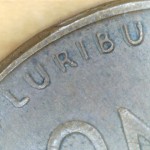
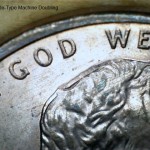
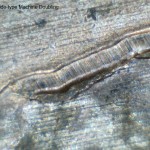 Hope this helps a little!!!
Jim
Hope this helps a little!!!
Jim
(A.K.A. Elmer Fudd) Be verwy verwy quiet... I'm hunting coins!!! Good Hunting!!!
Comment


Comment