1944D "Possible foreign planchet???"

Collapse
X
 
  • Time
  • Show
Clear All
new posts
  • Dearing
    Member
    • Sep 2018
    • 988

    #1

    1944D "Possible foreign planchet???"

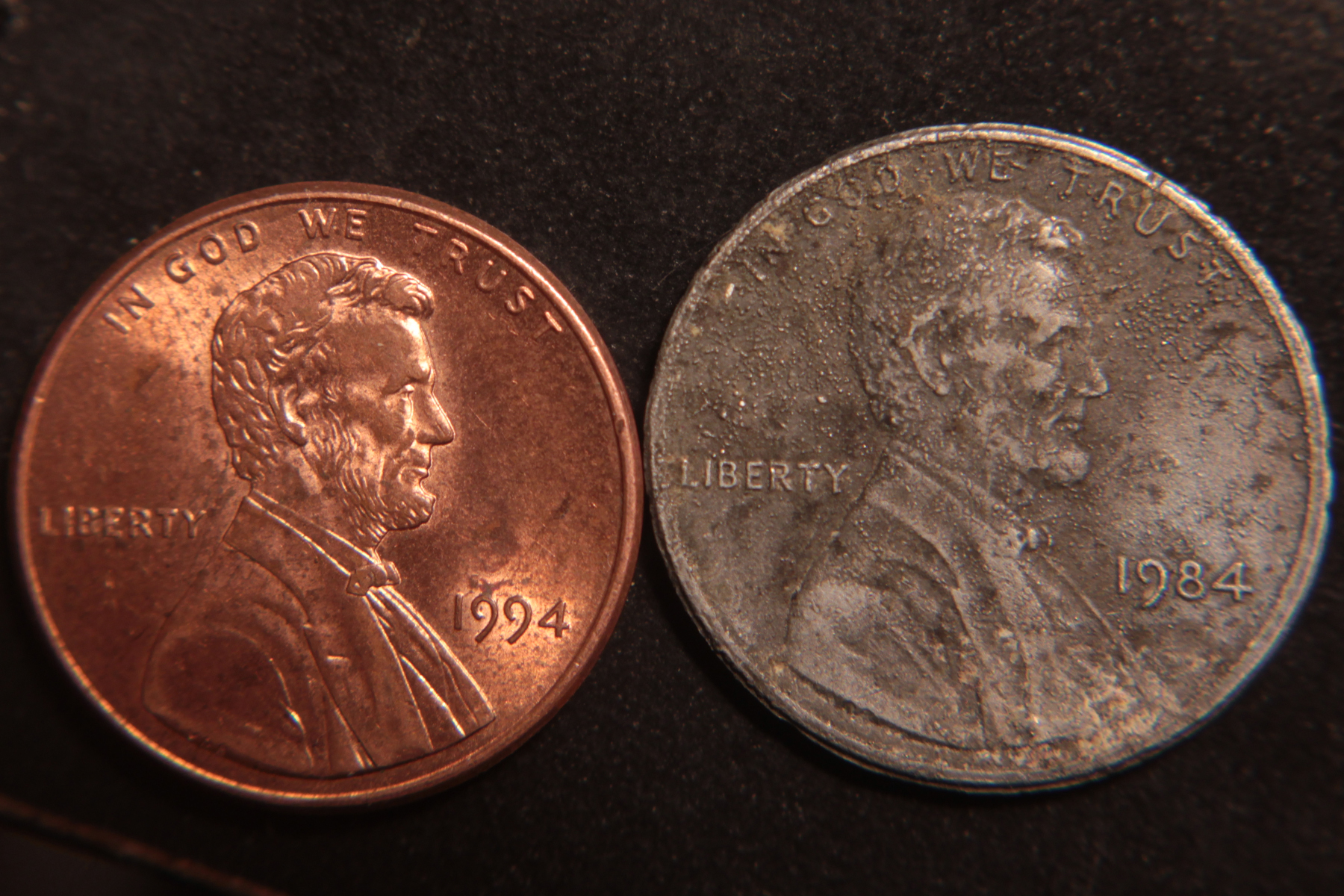
    Is it possible for this to have been struck on a foreign planchet? In 1944 the Denver mint also struck a Curacao 1 cent 95% copper 5% zinc foreign coin but it only weighed 2.5g... as you can see from the pics it's substantially thinner than the reg '44 and weighs .5 to .6 less. A couple of the other coins I have posted in the last pic also appear ate up by what appears to be a corrosive but didn't lose no where near that amount. I didn't want to scrape on the rim without checking here first to make sure I wasn't further damaging a possible error coin. Surely if a copper coin can end up on a '89 and '90 coin 7 to 8 years later, it's possible to get one mixed up in the same year, same mint lol
    Idk, need some seasoned knowledge to help me out on this one, I'm prolly overlooking some facts that prove otherwise. The foreign coin is also 19mm diameter and on the site it also stated that a US cent could be struck on this planchet. I know the coin is damaged and not worth much of nothing even if it was, would just be happy to have found one. Thank you for looking
    DD
    Attached Files
  • willbrooks
    Die & Design Expert, LCF Glossary Author

    • Jan 2012
    • 9477

    #2
    Of course it is possible a coin was struck on a foreign planchet. It is also possible the planchet stock was rolled thin. HOWEVER, since the thickness and diameter are both compromised, and since this coin was OBVIOUSLY exposed to a corrosive, Occham's razor would suggest that the corrosive is beyond any reasonable doubt the cause of the reduction in metal. In order to verify an actual error, you would have to have a coin that hasn't been in the ground for 75 years. Identifying an actual off-metal error would start with the coin not being eaten to death by acid, and even then, slight variations in thickness or weight are normal. That leaves you with x-ray spectography. Even with that, slight variations in the alloy content are also normal. In some years large variations in the alloy content occurred. Many of the off-metal claims I have seen are spurious at best, even with whole uncirculated coins. There is absolutely no way on Earth to ID one that was so obviously eaten by acid. It is junk. Spend it.


    p.s. To save you some time, every single one of the other coins in the last picture is also damaged.
    Last edited by willbrooks; 05-30-2019, 01:55 PM.
    All opinions expressed are not necessarily shared by willbrooks or his affiliates. Taking them may result in serious side effects. Results may vary. Offer not valid in New Jersey.

    Comment

    • Dearing
      Member
      • Sep 2018
      • 988

      #3
      Originally posted by willbrooks
      Of course it is possible a coin was struck on a foreign planchet. It is also possible the planchet stock was rolled thin. HOWEVER, since the thickness and diameter are both compromised, and since this coin was OBVIOUSLY exposed to a corrosive, Occham's razor would suggest that the corrosive is beyond any reasonable doubt the cause of the reduction in metal. In order to verify an actual error, you would have to have a coin that hasn't been in the ground for 75 years. Identifying an actual off-metal error would start with the coin not being eaten to death by acid, and even then, slight variations in thickness or weight are normal. That leaves you with x-ray spectography. Even with that, slight variations in the alloy content are also normal. In some years large variations in the alloy content occurred. Many of the off-metal claims I have seen are spurious at best, even with whole uncirculated coins. There is absolutely no way on Earth to ID one that was so obviously eaten by acid. It is junk. Spend it.
      Lol, I see yr point thank you for the knowledge. It was interesting still tho to rummage thru all the different foreign coins struck at the US mints and their specifications and all the different countries.

      Comment

      • willbrooks
        Die & Design Expert, LCF Glossary Author

        • Jan 2012
        • 9477

        #4
        Originally posted by Dearing
        Lol, I see yr point thank you for the knowledge. It was interesting still tho to rummage thru all the different foreign coins struck at the US mints and their specifications and all the different countries.
        Yes, that is good stuff to know. We were just looking at that because some of the other forum members were trying to help me find out if the Mint mark style #4 was used on any foreign coinage struck at the US Mint.
        We didn't find any.
        All opinions expressed are not necessarily shared by willbrooks or his affiliates. Taking them may result in serious side effects. Results may vary. Offer not valid in New Jersey.

        Comment

        • Dearing
          Member
          • Sep 2018
          • 988

          #5
          Originally posted by willbrooks
          Of course it is possible a coin was struck on a foreign planchet. It is also possible the planchet stock was rolled thin. HOWEVER, since the thickness and diameter are both compromised, and since this coin was OBVIOUSLY exposed to a corrosive, Occham's razor would suggest that the corrosive is beyond any reasonable doubt the cause of the reduction in metal. In order to verify an actual error, you would have to have a coin that hasn't been in the ground for 75 years. Identifying an actual off-metal error would start with the coin not being eaten to death by acid, and even then, slight variations in thickness or weight are normal. That leaves you with x-ray spectography. Even with that, slight variations in the alloy content are also normal. In some years large variations in the alloy content occurred. Many of the off-metal claims I have seen are spurious at best, even with whole uncirculated coins. There is absolutely no way on Earth to ID one that was so obviously eaten by acid. It is junk. Spend it.


          p.s. To save you some time, every single one of the other coins in the last picture is also damaged.
          lol, yeah I keep all my different damaged coins in a separate container just as a reference for the future and just to see all the different things that can and will happen to a penny one day I wanna put them all in a coin book or display case to show people just how many different things can happen to pennies and be able to explain each one lol weird, I know...

          Comment

          • GrumpyEd
            Member
            • Jan 2013
            • 7229

            #6
            I'm with Will on this, poor damaged cent.

            Looking at your pics that slick memorial might be the most slick memorial I've ever seem. That thing has wear like I only see on early wheat cents. If that is truly from wear it might have a value. I forget the terms they use but some collectors pay premiums for the lowest grade problem free coins (they want coins graded close to PO-1) and that one might be a winner!

            Comment

            • Dearing
              Member
              • Sep 2018
              • 988

              #7
              That's interesting, I never would have figured there is just something about this coin that my gut says don't let go of this coin, I've had it a while, just something about it is intriguing lol

              Comment

              • jfines69
                Member
                • Jun 2010
                • 28848

                #8
                That is one torn up abe... On the pic with all the worn coins 2nd row the 200? D... What does the rev look like???
                Jim
                (A.K.A. Elmer Fudd) Be verwy verwy quiet... I'm hunting coins!!! Good Hunting!!!

                Comment

                • Dearing
                  Member
                  • Sep 2018
                  • 988

                  #9
                  Originally posted by jfines69
                  That is one torn up abe... On the pic with all the worn coins 2nd row the 200? D... What does the rev look like???
                  Here is the reverse on that coin Jim, this one has always raised my interest too... I'm seeing new stuff on these older coins of mine that I couldn't see or photograph back when I was using my phone... the difference mega pixels make lol
                  Attached Files

                  Comment

                  • jfines69
                    Member
                    • Jun 2010
                    • 28848

                    #10
                    Thanks for the follow up... If that coin is larger than the rest it looks like some one tried to make it a Texas Cent... Info from the Glossary -

                    Texas Cent: A cent with a larger-than-normal diameter that was intentionally damaged outside the mint. The traditional method is hammering the cent between pieces of (usually) leather. However, another instance of cents with larger-than-normal diameters is now commonly seen on cents that have had their plating removed. Whatever methods are being used to strip the plating, most of which involve exposure to chemicals and heat, are leaving the resulting zinc core thinner with an expanded diameter. I am still trying to investigate exactly how this is happening. Below is an example of one of these stripped cents. Photos courtesy of jallengomez.
                    Jim
                    (A.K.A. Elmer Fudd) Be verwy verwy quiet... I'm hunting coins!!! Good Hunting!!!

                    Comment

                    • Dearing
                      Member
                      • Sep 2018
                      • 988

                      #11
                      Originally posted by jfines69
                      Thanks for the follow up... If that coin is larger than the rest it looks like some one tried to make it a Texas Cent... Info from the Glossary -

                      Texas Cent: A cent with a larger-than-normal diameter that was intentionally damaged outside the mint. The traditional method is hammering the cent between pieces of (usually) leather. However, another instance of cents with larger-than-normal diameters is now commonly seen on cents that have had their plating removed. Whatever methods are being used to strip the plating, most of which involve exposure to chemicals and heat, are leaving the resulting zinc core thinner with an expanded diameter. I am still trying to investigate exactly how this is happening. Below is an example of one of these stripped cents. Photos courtesy of jallengomez.
                      This one is the reg 19mm...I'm still haven't decided what exactly happened to this coin lol I did see an error on ref.com that explained where there is so much pressure the coin can fracture only and all the way around the rim but I can't find it again lol the pic showed some of the devices kinda smeared like this one but I really can't figure it out
                      I do however have a couple coins that look like yr pics here but they are also the reg 19mm.
                      Attached Files

                      Comment

                      • GrumpyEd
                        Member
                        • Jan 2013
                        • 7229

                        #12
                        The ones without plating were probably buried for a while.

                        Depending on the conditions the copper will dissolve leaving zinc intact, in other conditions the zinc can rot leaving the copper shell or anything in between and some get bigger.

                        I find lots of cents here walking or metal detecting and have lots of non plated cents, some bigger, some concave.
                        For the most part, in grass or regular soil the zinc rots leaving a pitted copper shell. In sandy areas the copper comes off and leaves the zinc intact and some are bigger.

                        I doubt that the man made Texas cent thing is true other than a small minority of them.
                        Looking at them might not tell much because many different things will look similar, beat it in leather, bury in sand, heat it up, thermal cycling, expose it to the right acid or chemicals in a science project, something random.

                        Comment

                        • Dearing
                          Member
                          • Sep 2018
                          • 988

                          #13
                          Originally posted by GrumpyEd
                          The ones without plating were probably buried for a while.

                          Depending on the conditions the copper will dissolve leaving zinc intact, in other conditions the zinc can rot leaving the copper shell or anything in between and some get bigger.

                          I find lots of cents here walking or metal detecting and have lots of non plated cents, some bigger, some concave.
                          For the most part, in grass or regular soil the zinc rots leaving a pitted copper shell. In sandy areas the copper comes off and leaves the zinc intact and some are bigger.

                          I doubt that the man made Texas cent thing is true other than a small minority of them.
                          Looking at them might not tell much because many different things will look similar, beat it in leather, bury in sand, heat it up, thermal cycling, expose it to the right acid or chemicals in a science project, something random.
                          That does make sense, thank you for sharing all yr knowledge and experience on my post

                          Comment

                          • Dearing
                            Member
                            • Sep 2018
                            • 988

                            #14
                            Originally posted by GrumpyEd
                            The ones without plating were probably buried for a while.

                            Depending on the conditions the copper will dissolve leaving zinc intact, in other conditions the zinc can rot leaving the copper shell or anything in between and some get bigger.

                            I find lots of cents here walking or metal detecting and have lots of non plated cents, some bigger, some concave.
                            For the most part, in grass or regular soil the zinc rots leaving a pitted copper shell. In sandy areas the copper comes off and leaves the zinc intact and some are bigger.

                            I doubt that the man made Texas cent thing is true other than a small minority of them.
                            Looking at them might not tell much because many different things will look similar, beat it in leather, bury in sand, heat it up, thermal cycling, expose it to the right acid or chemicals in a science project, something random.
                            I do have a question about the 1944d that I started on this thread... I was going thru my coins checking the diameters of them all and I have a few that have been eaten up by acid or some corrosive but all of them retained the 19mms... this '44 is exactly 18mm, is it common for them to retain their diameter or deplete or a possibility of both? It appears to only have 1/2 of a reg rim compared to other '44s.
                            The 1st pic is a reg cent the 2nd pic is the '44.
                            Attached Files
                            Last edited by Dearing; 06-05-2019, 03:44 PM.

                            Comment

                            • GrumpyEd
                              Member
                              • Jan 2013
                              • 7229

                              #15
                              Sure, if it was corroded or in corrosive stuff metal gets removed.
                              Acid cents get thin and smaller.

                              It can be natural, intentional. Out of the billions of cents out there they get exposed to all sorts of abuse.

                              Someplace on here I posted a link to a website where a guy buys coins from ponds and wishing wells and restores them by tumbling in a mixture. It can be something like that, A combination of things either intentional or random.
                              The sure thing is that it is missing some metal all over it.
                              Last edited by GrumpyEd; 06-05-2019, 05:43 PM.

                              Comment

                              Working...