
 Tweet
Tweet
This is a repeat performance of another post (with modifications), but I have been asked privately to post it in its own thread, because many would not find it where it is.
First thing first. The title is what it is because hub doubling is the technical term for the thing that causes doubled dies. The following statement puts it into context. "Every doubled die is an example of hub doubling."
Machine doubling happens on the press explicitly, meaning that the doubling is CAUSED by some malfunction in the press.
Hub doubling is caused at the hubbing press during die manufacture, and has nothing to do with the actual striking of the coins.
So...what's the big difference? Two very basic things differentiate the two. First, hub doubling is on the die itself. It is part of the design (not intentionally) that the die impresses into every coin it strikes. The dies are carefully inspected before being placed into service. Technicians are trained to spot and reject hub doubling - but it does slip once in a while as is evidenced by the cataloging systems that list thousands of different doubled dies.
Machine doubling, on the other hand, is the result of parts coming loose during the striking process. It all depends on the adjustment and proper operating order of a machine, which can malfunction at any time, and can mint thousands of examples of its malfunction before being discovered. Not only this, but it can happen on ANY die hung on the press, because the design on the die makes no difference as to whether it is securely fastened to the machine. So yes, doubled dies can (and sometimes do) also have machine doubling.
Back to the subject. I said two things differentiate the two. The first is their nature of manufacture. The second is the characteristics we use to detect which is which. Anyone with some experience spotting the two can with 100% accuracy identify both....EASILY. It's not rocket science. It's actually very simple.
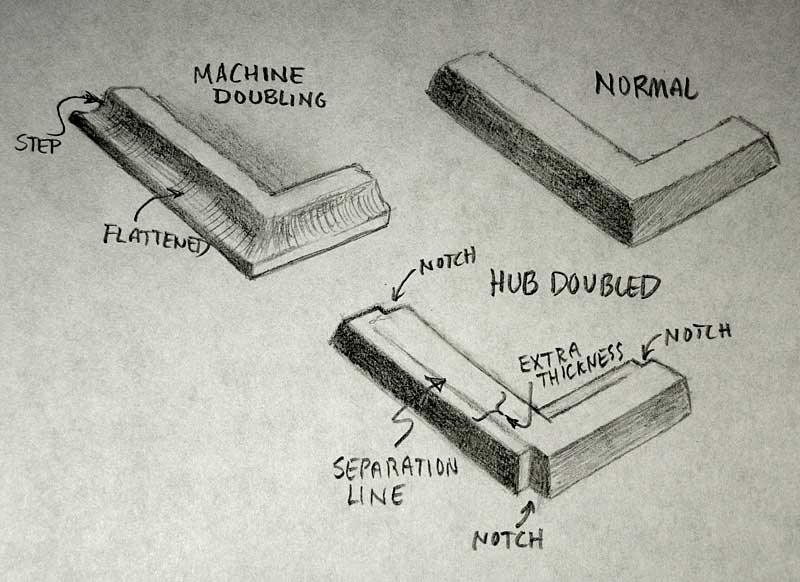
I have created a diagram which illustrates the following points in a visual form to aid in understanding what I am about to type. I will post the diagram after completing the description so you can use it to refer back to this post.
Machine Doubling
1. Always cuts away at the normal thickness of the devices affected. This in effect makes the device that stands out in relief thinner than it should be.
2. Has a step-down appearance to the 'doubling' which lacks character, boldness, and thickness. This happens because machine doubling literally flattens parts of otherwise normal letters.
3. Never shows 'notching' at the corners of the devices because the original die used to create them does not have this notching, and every coin is an exact copy of its parent die.
Hub Doubling
1. Always has extra thickness to some degree - in other words, the doubling never robs from the normal devices to cause the doubling.
2. In many cases 'notching' shows at the corners of the devices where the overlap in hubbing occurred. Just look at the picture, find 'notch', and this statement will be very clear.
3. Hub doubling actually creates a secondary 'set' of devices, which is apparent when looking at the doubling. It has relief - character. Machine doubling only flattens parts of the only set of devices that exist, because there was no doubling in the die that created the coin.
So...look at the images, refer back to this, and look at the images again. Once you get a hang of what this thread shows you, there should be little question about whether you have machine doubling if you're paying attention and understand what's exhibited here.
Moderators - I believe if this thread is made a sticky thread, we will be able to build upon it and answer most of the questions here by referring people to the thread instead of re-answering the same questions over and over again. Please consider.
First thing first. The title is what it is because hub doubling is the technical term for the thing that causes doubled dies. The following statement puts it into context. "Every doubled die is an example of hub doubling."
Machine doubling happens on the press explicitly, meaning that the doubling is CAUSED by some malfunction in the press.
Hub doubling is caused at the hubbing press during die manufacture, and has nothing to do with the actual striking of the coins.
So...what's the big difference? Two very basic things differentiate the two. First, hub doubling is on the die itself. It is part of the design (not intentionally) that the die impresses into every coin it strikes. The dies are carefully inspected before being placed into service. Technicians are trained to spot and reject hub doubling - but it does slip once in a while as is evidenced by the cataloging systems that list thousands of different doubled dies.
Machine doubling, on the other hand, is the result of parts coming loose during the striking process. It all depends on the adjustment and proper operating order of a machine, which can malfunction at any time, and can mint thousands of examples of its malfunction before being discovered. Not only this, but it can happen on ANY die hung on the press, because the design on the die makes no difference as to whether it is securely fastened to the machine. So yes, doubled dies can (and sometimes do) also have machine doubling.
Back to the subject. I said two things differentiate the two. The first is their nature of manufacture. The second is the characteristics we use to detect which is which. Anyone with some experience spotting the two can with 100% accuracy identify both....EASILY. It's not rocket science. It's actually very simple.
I have created a diagram which illustrates the following points in a visual form to aid in understanding what I am about to type. I will post the diagram after completing the description so you can use it to refer back to this post.
Machine Doubling
1. Always cuts away at the normal thickness of the devices affected. This in effect makes the device that stands out in relief thinner than it should be.
2. Has a step-down appearance to the 'doubling' which lacks character, boldness, and thickness. This happens because machine doubling literally flattens parts of otherwise normal letters.
3. Never shows 'notching' at the corners of the devices because the original die used to create them does not have this notching, and every coin is an exact copy of its parent die.
Hub Doubling
1. Always has extra thickness to some degree - in other words, the doubling never robs from the normal devices to cause the doubling.
2. In many cases 'notching' shows at the corners of the devices where the overlap in hubbing occurred. Just look at the picture, find 'notch', and this statement will be very clear.
3. Hub doubling actually creates a secondary 'set' of devices, which is apparent when looking at the doubling. It has relief - character. Machine doubling only flattens parts of the only set of devices that exist, because there was no doubling in the die that created the coin.
So...look at the images, refer back to this, and look at the images again. Once you get a hang of what this thread shows you, there should be little question about whether you have machine doubling if you're paying attention and understand what's exhibited here.
Moderators - I believe if this thread is made a sticky thread, we will be able to build upon it and answer most of the questions here by referring people to the thread instead of re-answering the same questions over and over again. Please consider.

Comment