You are currently viewing our boards as a guest which gives you limited access to view most discussions and access our other features. By joining our community you will have access to post topics, communicate privately with other members, respond to polls, upload content and access many other special features.
For more information on registration and an upgrade to Paid and Premium Memberships go to our Membership page and join our community today!
If you have any problems with the registration process or your account login, please contact contact us.
If this is your first visit, be sure to
check out the FAQ by clicking the
link above. You may have to register
before you can post: click the register link above to proceed. To start viewing messages,
select the forum that you want to visit from the selection below.
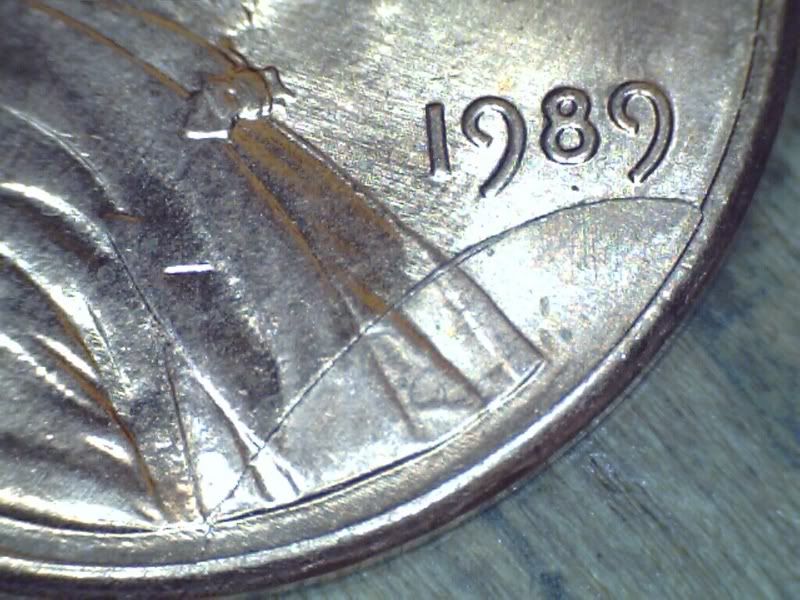
I'm not totally sure it's a retained die break. Is there a difference in height between the broken area and the rest of the coin? (Did the broken piece move). From the pics it's looks like a rim-to-rim die crack. Of course the definition of each could be argued. Just voicing my opinion.
From what I had learned in the past, a retained cud is where the die breaks from rim to rim but does'nt fall away yet and when it is struck the line of the break shows on the coin as a raised die break. It is a cud when the break occurs on the rim of the planchet. A retained cud is when the break doesn't fall off yet. This is what I remember learning sometime ago, so that's why I called it a retained cud. I could be wrong. lets see what others say. I'm always game on learning something new.
Rock
Rock
My LCR Photo Albumof Graded Lincoln Cent Cherry Picker Varieties
This is where it gets interesting. I view it as this: A die crack is a "thin" line anywhere on the die (surface crack). A die break is a deeper and wider crack usually with chips. Retained die break is an entire section of the die broken apart from the rest of the die but remaining within the collar and impressing the intended design. CUD: the aforementioned retained die break falls out leaving a bulbous blob of metal on the struck coin.
A recent discussion and past discussions all seemed to revolve around "rim-to-rim". There is the very rare center die break!
That's pretty cool. Thanks for sharing the pics. So, even though my coin shows a break from rim to rim in a semi-circular contour as yours does, it's not a retained cud. I see your pics but still haven't wrapped my mind around the difference between the 2. Also, when I google lincoln cent retained cud I get links to pics of coins like mine. I'll keep looking and studying it until I understand it better. It's just weird to think of something one way for 40 yrs and then all of a sudden you find you were wrong all that time.
Rock
Rock
My LCR Photo Albumof Graded Lincoln Cent Cherry Picker Varieties
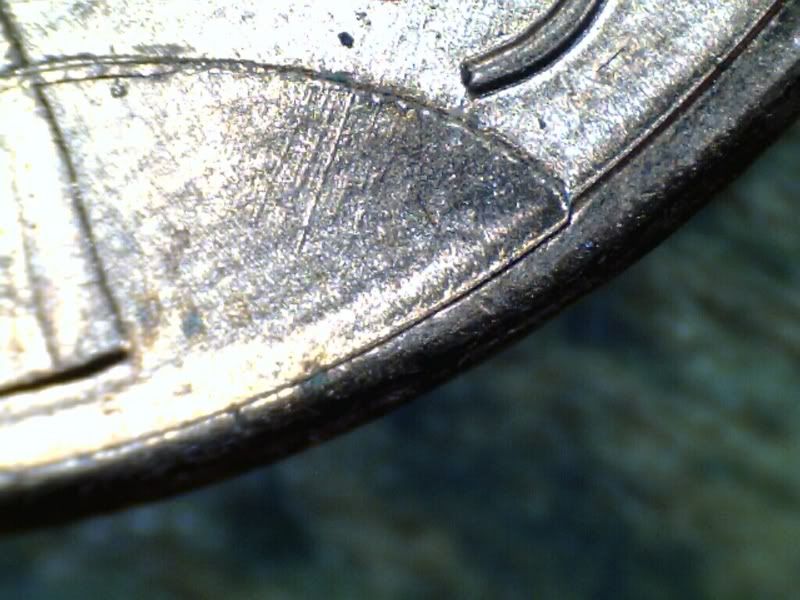
If you look really close at the second pic of the 1946 D in question the design on the wheat does shift slightly.
I think Rock is right. Very minor but it is there
Your right, there is very slight shift east of the edge of the stalk. I'm definately learning something today. thanks everyone for jumping into this conversation. And it would be ironic if it turned out that I was right. This time it would be luck. next time in confidence.
Rock
Rock
My LCR Photo Albumof Graded Lincoln Cent Cherry Picker Varieties
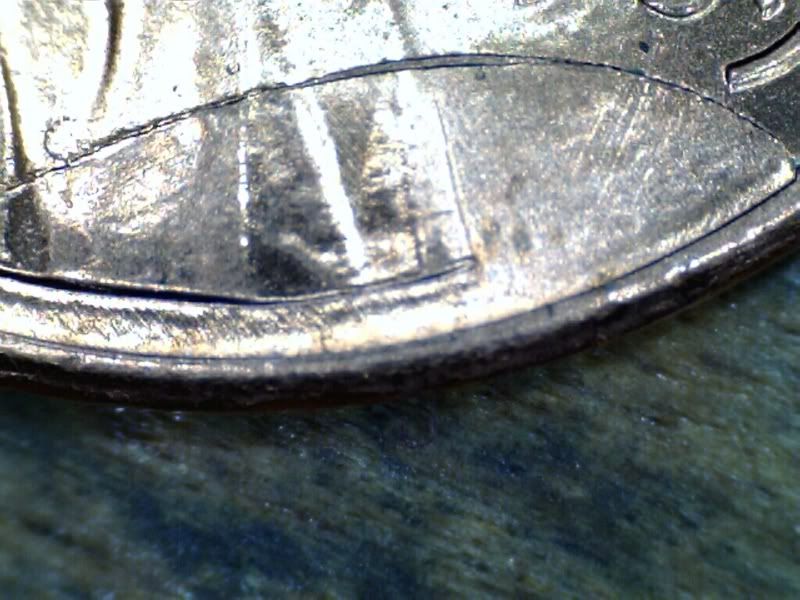
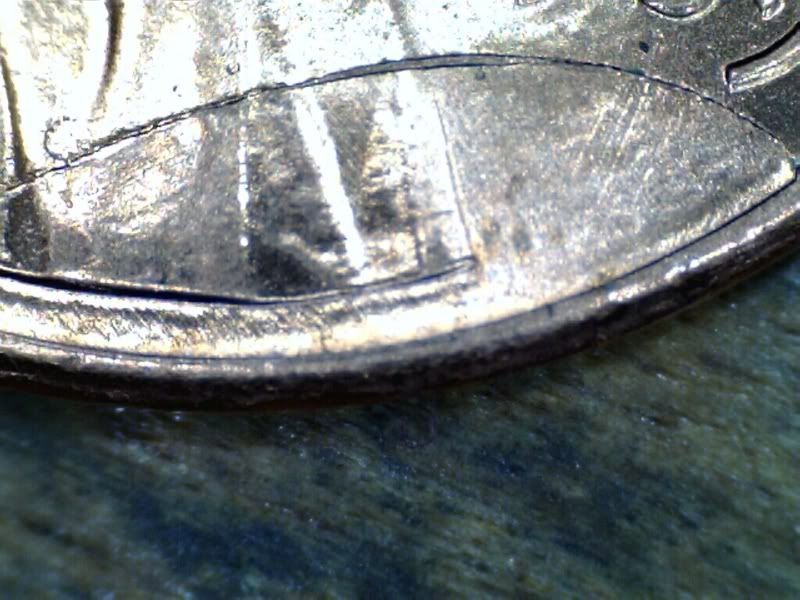
I don't know if these pics will help at all. I did however take another look at this under the scope. The lower die crack does go to the rim but is so very faint and although I do see a shift in the design element on the upper die crack, I don't see it on the lower part.
Rock

 Tweet
Tweet


Comment